
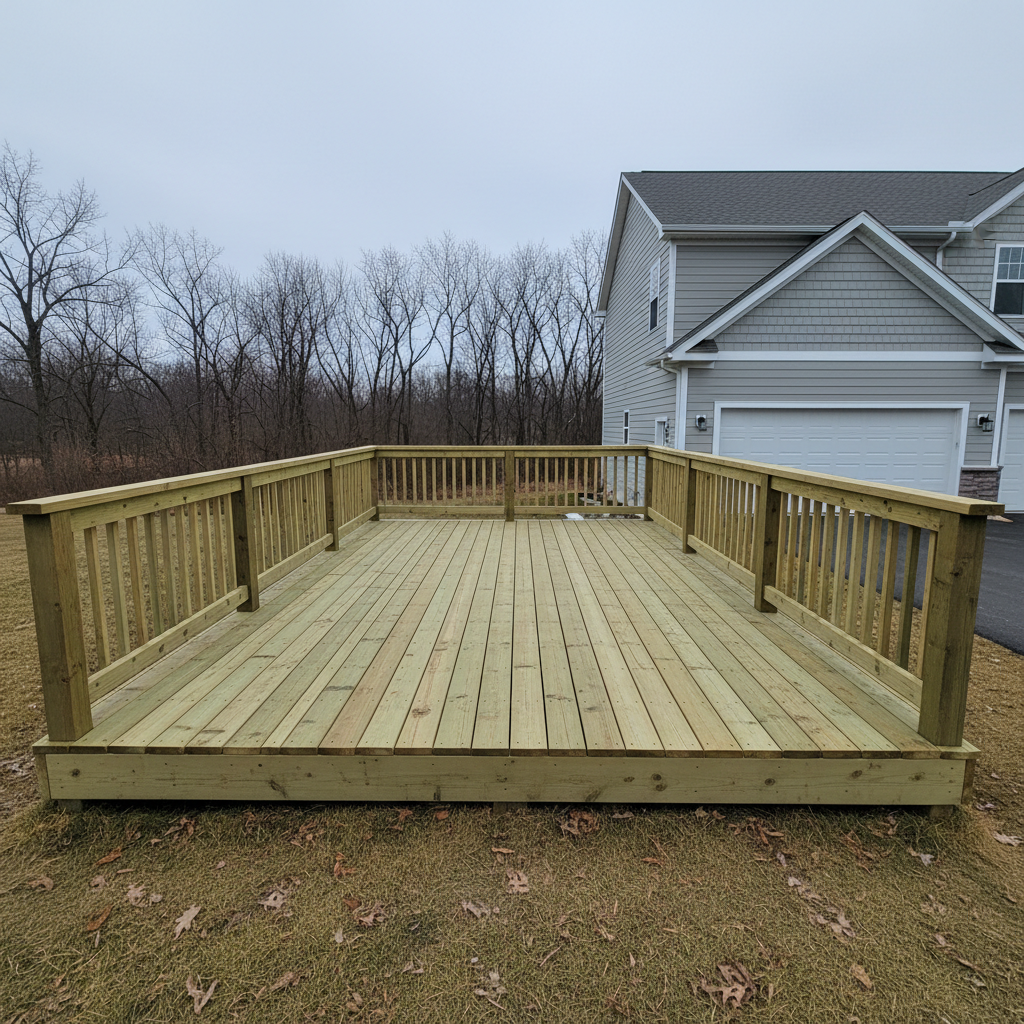
Most people shopping for a deck builder in West Allis have never hired one before and won't do it again for twenty years. That's exactly why the bad actors in this trade can get away with so much. You don't know what a footing should look like, you don't know what a fair price per square foot is this year, and you're trusting someone you met for twenty minutes with a four-figure hole in your backyard. Here's what actually separates a builder worth hiring from one you'll be calling back to fix his own work.
Ask how deep the footings are going, and why
Wisconsin frost depth code calls for footings at least 42 inches below grade in this part of the state, and most West Allis building inspectors hold to that number without much flexibility. A deck that sits on footings poured 18 or 24 inches down might look fine the first year. Then February hits, the ground freezes and heaves, and by year three you've got a deck that rocks when you walk across it or has pulled away from the ledger board. Clay soil, which is common across Milwaukee County, makes this worse than sandy soil does, because clay holds water and expands more violently when it freezes. A builder who knows the area will either dig to code depth with a footing form, or talk to you honestly about helical piers if the soil or access makes digging a problem. If someone quotes you a deck without ever mentioning footing depth, that's a conversation you need to force.
Find out if they're actually pulling a permit
The City of West Allis requires a building permit for most deck construction, and that's not a formality you can skip to save time. The inspection process typically checks footings before you pour concrete, then framing before the decking goes down, then a final once railings and stairs are in. A builder who tells you "we don't need a permit for this one" is either wrong or hoping you won't check. Unpermitted decks show up during home inspections when you go to sell, and buyers' attorneys love finding them. If your lot backs onto an alley, which a lot of West Allis properties do, setback rules get checked too, and a sloppy builder who doesn't pull a permit isn't checking those either. Ask directly: who's pulling the permit, and can I see it once it's issued.
Look at what's already in your yard before you believe the quote
A lot of West Allis housing was built between the 1920s and the 1950s, which means mature trees, clay tile sewer laterals that are decades past their design life, and lot lines that are tighter than anything built today. A deck builder who shows up, glances at the yard, and hands you a price on the spot hasn't accounted for any of that. A real site visit means checking where the sewer lateral runs so nobody augers a footing hole straight through it, checking the slope of the yard so water sheds away from the house and not under the new deck, and measuring the actual run from the house to see if a ledger board attachment is even possible or if the deck needs to be freestanding instead. None of that takes long, but skipping it is how you end up with a deck that ponds water against the foundation every spring thaw.
What a real quote breaks down, and what a vague one hides
A quote that just says "deck, $9,800" tells you nothing. A quote worth signing breaks out the framing lumber grade, whether it's pressure-treated pine rated for ground contact where posts touch soil, what the decking material is, whether fasteners are hot-dip galvanized or stainless, and what the flashing detail looks like where the ledger meets the house. That ledger flashing matters more than almost anything else on the job. It's the single most common point of rot on an older deck, because water runs down the siding, gets behind an unflashed ledger board, and sits there for years before anyone notices the house band joist has gone soft. A quote should also say how many days the work will take and whether you can walk on new concrete footings right away or need to wait, which is usually around 48 to 72 hours before framing can load onto them, longer if it's cold.
Red flags that mean you walk
- A price that's dramatically lower than every other quote you got. Lumber and composite decking cost what they cost. If someone's $4,000 under everyone else, they're cutting footing depth, fastener quality, or their own insurance.
- No certificate of insurance when you ask for one. If a worker falls off your deck framing and the contractor has no workers' comp, the liability can land on your homeowner's policy.
- Pressure to sign and pay a large deposit the same day you meet. A deposit of 10 to 30 percent is normal. Being asked for half or more before any material is ordered is not.
- Vague answers about who pulls the permit, or a suggestion that you don't need one for a deck under a certain height. That's not always true, and it shifts legal risk onto you.
- No willingness to show you a deck they built at least a year or two ago, not a photo, an actual address you can drive past. A fresh deck always looks good. One that's weathered a Wisconsin winter or two tells you more.
What to ask about after the build, not just during it
Decking material matters for how much maintenance you're signing up for. A pressure-treated pine deck needs staining or sealing roughly every two to three years in this climate, more often on a south-facing deck that takes full summer sun. Composite decking costs more up front but doesn't need that recoat cycle, though it still needs the substructure underneath inspected over time. Ask who you call if a board cups, a railing loosens, or the ledger flashing starts to leak three years from now. A builder who's still answering the phone for a deck he built a few years back is a different kind of contractor than one who's already moved on to the next subdivision.
We build and repair decks across West Allis and the surrounding towns, and we've torn out more undersized footings and unflashed ledger boards than we'd like to admit. If you want a second opinion on a quote you've already got, or want to start from scratch, you can see more about our deck builder work and get in touch.